
How Burnham might approach the Middle East as PM - Article by Chris Doyle in Arab News, 30 June 2026
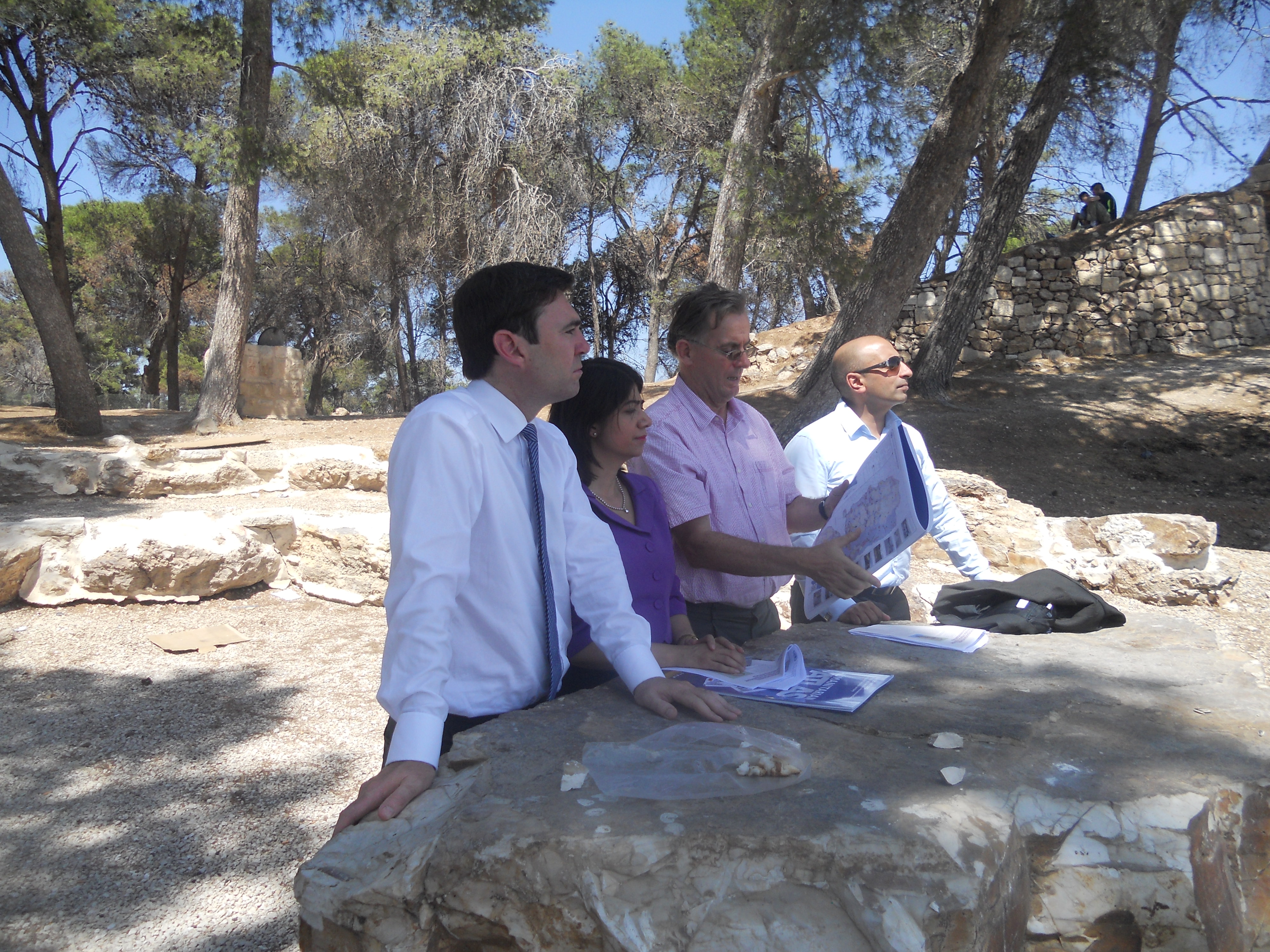
Back in September 2012, I took Andy Burnham on a parliamentary delegation to the West Bank. It was his first proper visit there. Like most politicians on their first such trip, he was visibly shocked.
By the middle of the first day, Burnham turned to me and said: “Chris, I have always been told that we support a two-state solution and I do. But where is this second state?” Confronted by only a small fraction of the phenomenal occupation infrastructure of checkpoints, walls, barriers, settlements and military installations, he had reached the same conclusion as so many on the ground in Palestine.
Fast forward 14 years and Burnham is almost certainly going to replace Keir Starmer as the UK prime minister. Among the many changes that Labour supporters hope Burnham will make from the two years of Starmer’s rule will be the British position on and approach to Palestine. Questions also arise as to what his position will be on broader Middle East matters.
To assess his views, one has to feed off a few meager scraps. What we know so far is a product of calculated ambiguity. As Manchester mayor, he did not venture off into international affairs every day, although he had to handle relations with the city’s sizable Muslim community.
Burnham did vote for the 2003 Iraq war. That is held against him, but he has expressed regret and claims to have learned lessons from that and America’s war on terror. Many are in that camp. “While there remains a case for the removal of Saddam Hussein, I can’t justify the rage, the rhetoric, the haste with which it was done, nor the lack of a plan for the aftermath,” he wrote in 2023.
He warned against the UK getting involved in the US-Israeli war on Iran earlier this year. This places him with the overwhelming majority of the British public.
In my experience with him, Burnham seemed genuinely troubled by the Israeli repression of Palestinians. He called for a ceasefire earlier than most Labour politicians in October 2023 and he co-signed a letter in June 2025 demanding the UK government recognize a Palestinian state “without conditions.”
One likely measure is a full ban on trade with Israeli settlements. The Starmer government came frustratingly close to doing this. It was like jumping three-quarters of the way across a stream when the foreign secretary announced that businesses should not do business with settlements. The “should not” has to become a “must not.” Burnham knows the Labour rank and file and his parliamentarians overwhelmingly want to see this. He would be wise to deliver.
Against this, critics have pointed to Burnham’s refusal to state if Israel is committing genocide in Gaza. “I can’t judge things of that enormity from where I am as mayor of Greater Manchester,” he said. Yet he has left the door open to accepting such a determination — a door that Starmer firmly closed.
Burnham once described the Boycott, Divestment and Sanctions movement as “spiteful,” a position that hardly holds now, as the Labour Party and government have adopted sanctions, including against two Israeli ministers. During the 2015 Labour leadership contest, Burnham said “the first country I will visit if elected is Israel,” leaving many to ask why.
Yet, for all the parsing of every statement on the Middle East, Burnham’s policies may be determined by his stances on other matters. Before Burnham thinks of this area of the world, he will have to work out two relationships, the results of which provide the platform to approach how he handles other areas of the world.
The first is with US President Donald Trump. Imagine his first bilateral meeting with Trump. The two are not cut from the same political cloth. This may not matter, as Trump and New York Mayor Zohran Mamdani seemed to get on when they met. Trump loves a winner too. Trump and Starmer fell out over Iran and several other matters. Burnham may see electoral advantage in keeping a polite distance, yet he will be tempted to find some areas of agreement, perhaps on defense spending. Burnham might be lucky if the Republicans lose control of Congress in November, as this would weaken Trump’s hand.
The second fundamental relationship is with the EU. Starmer has already shifted the UK into a much closer embrace, but can Burnham make it even closer? Will he work for a stronger European consensus on Russia and the Middle East?
The final factor may simply be this: Burnham is likely to be a far more domestic-oriented prime minister than Starmer. His priority will not be Palestine or the wider Middle East. He will be focused on healing a fractured Britain, countering the tidal waves of hate and division and rebuilding the economy. This is where the next election will be won or lost and how his premiership will be judged.
However, as he reflects on that 2012 visit, Burnham will remember those dispossessed communities we visited, those whose homes were threatened. He knows such atrocities have to end and that a failure to act on Palestine would endanger his legacy.


